Flatbed trucking is one of the most demanding specialties in the transportation industry. Unlike dry van or reefer, flatbed loads are exposed to the elements and require meticulous securing. These seven rules will keep you, your cargo, and everyone else on the road safe.
1. Inspect Every Load Before Moving
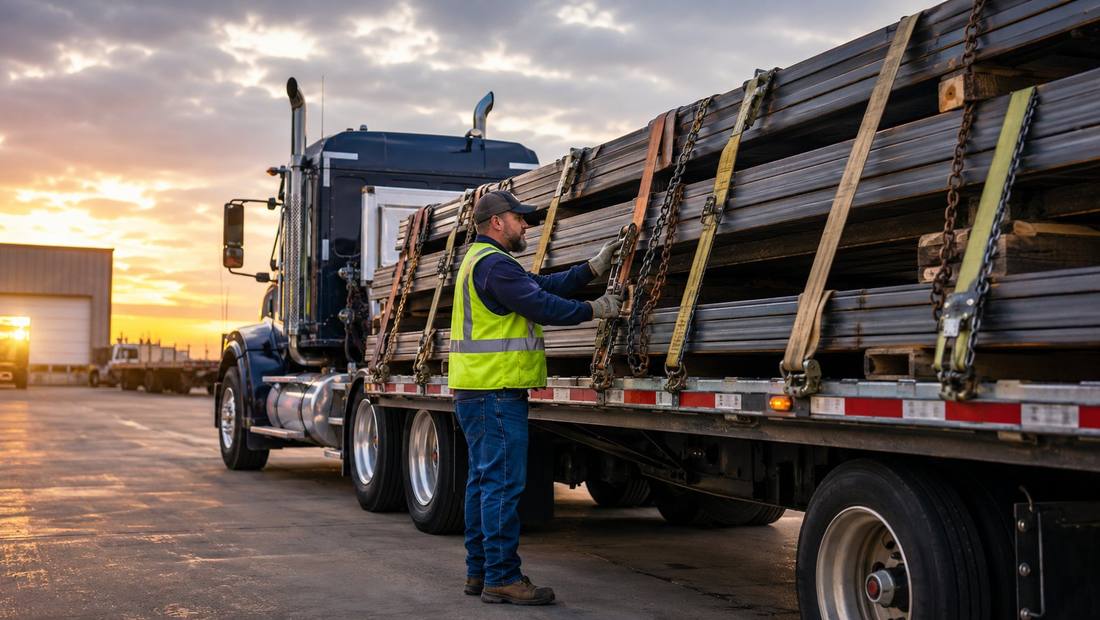
Never assume a load was secured correctly by someone else. Walk the entire trailer before you pull out of the yard. Check all tie-downs, edge protectors, tarps, and blocking for proper placement and tension. A few extra minutes at origin can prevent a catastrophic incident on the highway.
"A load inspection is not a formality — it's your first line of defense against a cargo shift at 65 mph."
2. Know Your Securement Rules
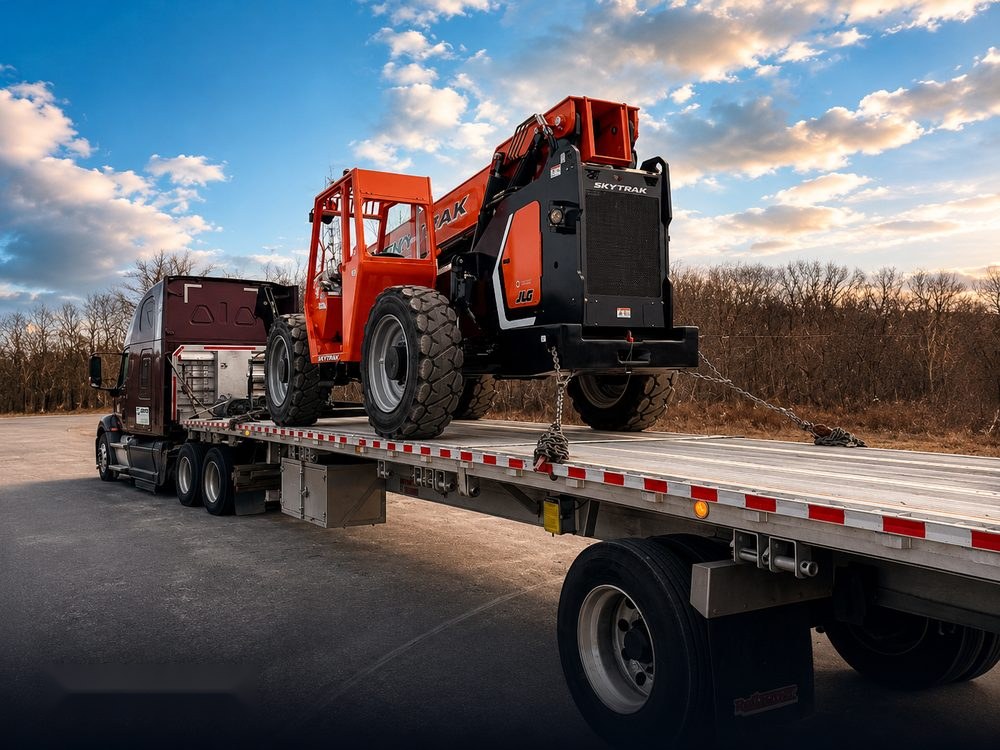
The Federal Motor Carrier Safety Administration (FMCSA) sets minimum requirements for cargo securement. Know the rules for your specific commodity — steel coils, lumber, and heavy machinery each have different requirements. When in doubt, over-secure.
3. Use the Right Number of Tie-Downs
The general rule: one tie-down for every 10 feet of cargo. For cargo under 5 feet, use at least two tie-downs. Always use the correct Working Load Limit (WLL) for the weight you're carrying, and inspect straps for fraying, cuts, or broken hardware before every use.
4. Protect Load Edges
Straps can cut through cargo and themselves when they contact sharp edges. Use edge protectors at every point where a strap contacts a corner or edge. This protects both the cargo and the strap's integrity.
5. Stop and Re-Check Within 50 Miles
Always stop within 50 miles of departure to re-inspect your securement. Cargo settles and straps can loosen after initial movement. After the first stop, re-check every 150 miles or at every duty-status change.
6. Be Weather-Aware
- Check the weather along your entire route before departure
- Secure tarps tightly — wind force at highway speed is enormous
- In rain or snow, add extra securement and allow longer stopping distances
- If conditions become unsafe, pull over — no delivery is worth your life
7. Never Skip the Post-Trip Inspection
A thorough post-trip inspection helps you catch problems before they become your next trip's headache. Log everything in your DVIR and report any damage to equipment or missing hardware immediately.
"Safety isn't a checkbox — it's a culture. At BENTOS, we build it into every dispatch, every load, every mile."
Following these seven rules consistently will make you a safer, more reliable flatbed driver — and that reputation is worth its weight in gold in this industry.
Drive With BENTOS Inc
Looking for a company that takes safety seriously? Apply today.
Apply Now →